

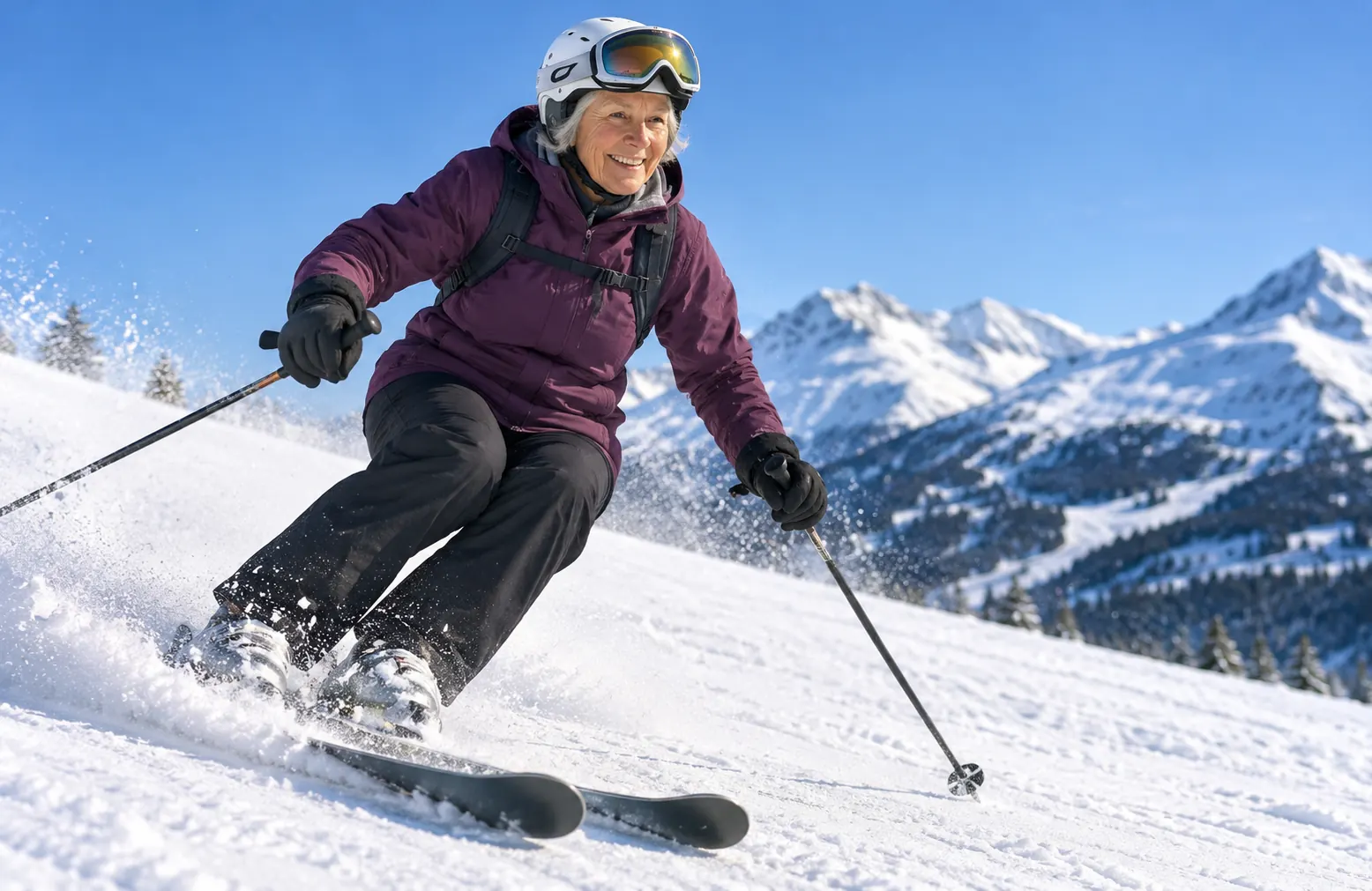
Planning a skiing holiday? A little preparation before you travel can make a big difference to how much you enjoy your time on the slopes.
Skiing is one of those activities that many of us only do for one or two weeks each year. We spend months looking forward to the holiday, but often give relatively little thought to preparing our bodies for it.
Then, suddenly, we're asking our legs to cope with several hours of skiing each day, often for six consecutive days. It's not surprising that aching thighs, tired legs and sore knees can become familiar parts of a skiing holiday.
As a physiotherapist in Harborne, Birmingham, and someone who has worked with GB Para Snowsport, I'm particularly interested in helping people build the strength and physical capacity to continue enjoying the activities they love.
The good news is that you don't need a complicated skiing-specific workout to prepare. A well-rounded strength training programme is an excellent starting point.
What does a day of skiing actually demand from your body?
Think about everything involved in a typical ski day. Before you've even reached the slopes, you might have carried your skis and boots, walked across slippery ground and climbed stairs in heavy equipment.
Once you're skiing, your legs are repeatedly working to control your speed, absorb forces and maintain your position. You'll need balance and coordination as the terrain changes. And if you fall, you'll need sufficient strength and mobility to get yourself back up again.
Skiing is demanding on your legs, but it involves much more than your quadriceps. Your hips, trunk, shoulders and arms all contribute. That's why I prefer preparing people through seven fundamental movement patterns rather than focusing exclusively on a few traditional ski exercises.
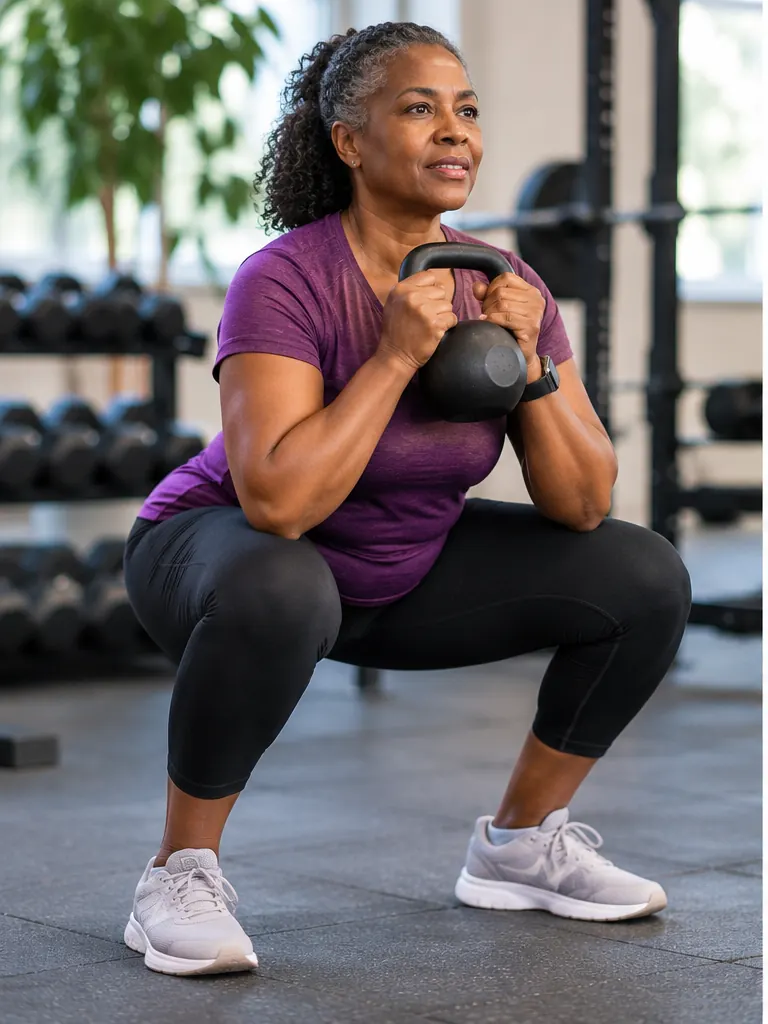
1. Squat
Squatting helps develop strength through your thighs and hips. These muscles play an important role in controlling your position when skiing, particularly as you bend your knees and absorb changes in terrain.
Exercises to try: Goblet squats, bodyweight squats or leg presses.
2. Hip hinge
A hip hinge involves bending at your hips while maintaining control of your trunk. It strengthens muscles around the hips and back, including the glutes and hamstrings.
Exercises to try: Romanian deadlifts, kettlebell deadlifts or hip hinges with a resistance band.
3. Lunge
Skiing regularly challenges your ability to control your weight through each leg. Lunges and split squats are useful for developing strength and control when your feet aren't positioned evenly.
Exercises to try: Reverse lunges, split squats or step-ups.
4. Push
Upper-body strength might not be the first thing you associate with skiing, but it can help with everyday tasks throughout your holiday. Think about pushing yourself up from the ground after a fall.
Exercises to try: Press-ups against a wall or bench, dumbbell chest presses or shoulder presses.
5. Pull
Anyone who's used a button lift or T-bar knows they can sometimes give you quite a sudden pull forwards, often with more force than expected!
Having good pulling strength can help you maintain your grip and control your body when the lift first takes hold.
Exercises to try: Seated rows, resistance band rows or lat pulldowns.
6. Rotation
Your trunk helps you maintain control as your upper and lower body move in different directions. Training controlled rotational movements can help develop strength and coordination through your torso.
Exercises to try: Cable rotations, resistance band rotations or Pallof presses.
7. Carry
Carrying exercises are particularly relevant to the practical demands of a ski holiday. Walking with heavy ski boots, carrying equipment and moving around unfamiliar environments all require strength and stability.
Exercises to try: Farmer's carries or suitcase carries using dumbbells or kettlebells.
How should you put these exercises together?
You don't need to perform every exercise in every session. A sensible starting point is two or three strength sessions each week, selecting exercises that cover the main movement patterns. If you'd prefer some guidance and a regular routine, our Strength & Rehab Classes offer progressive training in a small group.
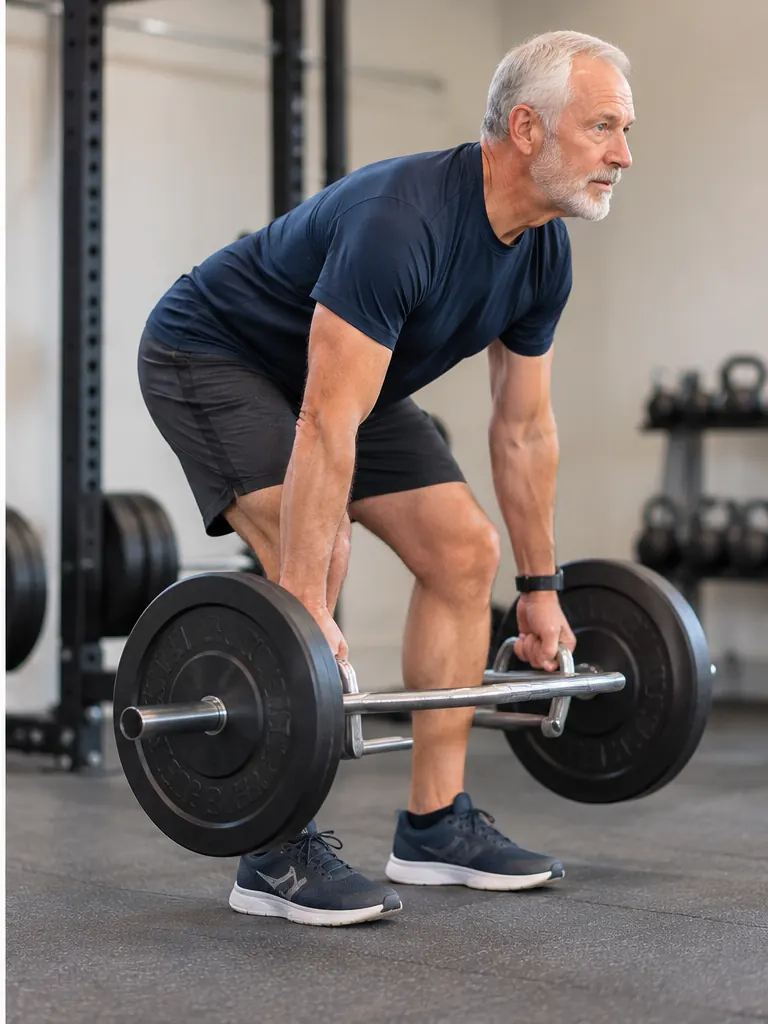
For example, a session might include: Goblet squat (2–3 sets of 8–12); Romanian deadlift (2–3 sets of 8–12); reverse lunge (2 sets of 8 per leg); seated row (2–3 sets of 8–12); cable rotation (2 sets of 10 per side); and farmer's carry (3 walks of 20–30 metres).
Choose a resistance that feels challenging while allowing you to maintain good control. Build up gradually as your strength and confidence improve. As your holiday approaches, you could also include some appropriate balance exercises and aerobic activity to help prepare for longer days on your feet.
When should you start preparing for skiing?
Ideally, start around 8–12 weeks before your holiday. That gives you time to build strength gradually and become familiar with the exercises.
However, if your holiday is only four weeks away, it's still worth starting. You can make useful progress in your confidence, exercise technique and physical capacity, even over a relatively short period.
The important thing is not to suddenly increase your training dramatically just before travelling.
What if you already experience knee pain when skiing?
Knee discomfort doesn't automatically mean you need to give up skiing. There are several possible reasons why skiing might aggravate your knees, including the demands of the activity, your current strength and capacity, or an existing knee condition.
A knee pain physiotherapy assessment can help you understand what might be contributing to your symptoms and identify practical ways to manage them.
Could a Ski Mojo help?
A Ski Mojo is a wearable spring-assisted device designed to reduce some of the load passing through your legs while skiing. Some people find that it helps them manage knee discomfort and leg fatigue, allowing them to enjoy more time on the slopes.
It isn't suitable for everyone, and it shouldn't be considered a replacement for building strength or addressing an underlying knee problem. It is also not a stability brace for an unstable knee.
I offer personalised Ski Mojo fittings in Birmingham at my Harborne clinic. We can discuss whether the device might be appropriate for you before arranging a fitting.
Prepare for the holiday you want to enjoy
The aim of preparing for skiing isn't simply to avoid feeling sore after your first day. It's about building the physical capacity to enjoy your holiday, feel more confident on the slopes and make the most of the time you've been looking forward to.
You don't need to train like a competitive skier. You need a realistic programme that challenges your body appropriately and progresses over time.
If you would like support preparing for your next skiing holiday, we offer physiotherapy and strength rehabilitation in Harborne, Birmingham. You can also learn more about our Ski Mojo fitting service.
For a longer discussion of skiing preparation, listen to the original Never Too Old to Lift podcast episode.
This article is intended as general information. Exercise should be adapted to your individual health, ability and circumstances.
Back to all Advice